A buyer's inspector spends four hours on your property. She opens the septic lids, watches the radon monitor tick past hour forty-eight, walks the downhill side of the foundation with a moisture meter, and asks whether the seller has the percolation test on file. Somewhere in those four hours, on most Signal Mountain listings, she finds something. What happens next depends almost entirely on decisions the seller made before the sign went in the yard.
Signal Mountain does not sell like the valley. In July 2026, homes here carried a median list price of $825,000 at roughly $260 per square foot, with a median 63 days on market, the same figure as July 2025. Crye-Leike's snapshot pegs the average listing at 3,321 square feet and 44 years old. That combination, older housing stock plus a two-month sell window, is the mechanism most sellers underestimate. In a fast valley market, a bad inspection becomes a small credit and a Friday closing. On the mountain, a bad inspection becomes a buyer walking, a listing aging past 90 days, and a price reduction that dwarfs anything the seller would have spent to address the finding up front. This post is about the four items that decide which side of that outcome you land on, and the Tennessee disclosure rules that quietly govern the rest.
Four items a mountain inspector flags that a valley inspector rarely sees
Signal Mountain sits on Walden Ridge. Sandstone caps limestone, town sewer stops where the incorporated boundary stops, and most residential lots have some grade to them. Those three geographic facts drive four inspection items that behave differently up here than they do in Red Bank or East Brainerd.
Septic. Any home outside the Town of Signal Mountain sewer footprint is on a private system, and a buyer's inspector will not sign off on a visual walk-over. A defensible septic inspection uncovers both ends of the tank, checks baffles and effluent filters, and reads the leach field stones for the black waterline that marks a failing drain field. SewerMan, Volunteer Septic, Flush Fellas, and HMG Construction all perform this work in the 37377 area. A pump-and-inspect run before listing costs a few hundred dollars. A drain field replacement discovered under contract runs into five figures and almost always kills the original deal timeline.
Radon. EPA classifies Hamilton County as Radon Zone 2, with a predicted indoor average of 2 to 4 pCi/L, and homeowner-submitted testing compiled by RadonResources shows a Hamilton County average of roughly 5.67 pCi/L, above the EPA's 4.0 pCi/L action threshold. Mountain homes with finished basements or daylight lower levels concentrate radon the way a valley slab home does not. A pre-listing 48-hour test from LunsPro or Chattanooga Home Inspector runs $150 to $250. If the number comes back high, sub-slab depressurization typically installs for $800 to $2,000, and the seller controls the vendor and the timeline instead of negotiating both under a fourteen-day inspection contingency.
Sinkholes and percolation records. Signal Mountain's limestone base is the same karst geology that produces the sinkhole disclosure line on every Tennessee purchase contract. Tenn. Code Ann. § 66-5-212 requires sellers to disclose, in writing, any known sinkhole on the property, the results of any percolation or soil absorption test accepted by TDEC, the presence of an exterior injection well, and whether the residence has ever been moved from an original foundation. These disclosures survive even when a buyer signs a disclaimer and takes the home "as-is." Sellers who cannot lay hands on the perc test from the original build should request a copy from TDEC or the county before a buyer's attorney does.
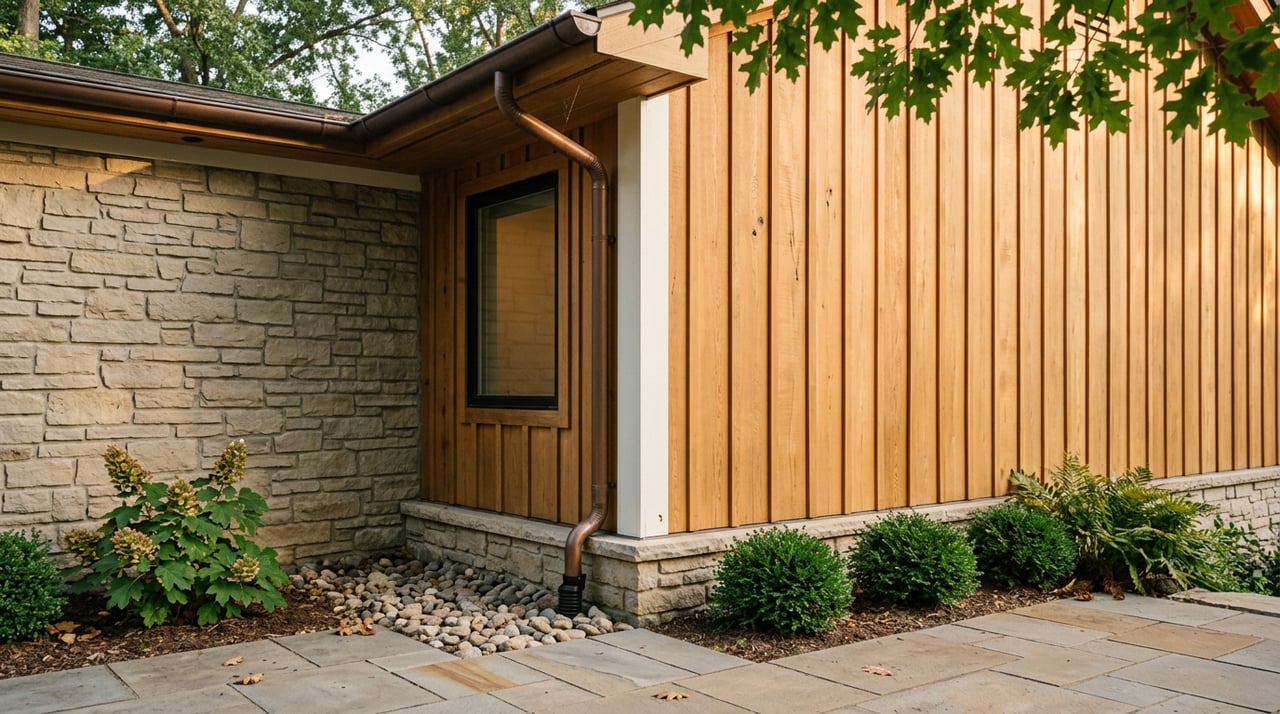
Slope, drainage, and foundation movement. Most mountain lots step downhill. Inspectors read that grade for negative drainage against the foundation, retaining wall deflection, and the hairline cracks that follow settlement on a bench cut. Nothing on this list is unusual for the geography, but every item lands harder in a report when it appears next to a moisture meter reading. The cheapest fixes, extending downspouts, regrading a swale, and cleaning a French drain, cost a weekend and remove the sentence from the report.
What Tennessee makes you disclose, even in an "as-is" sale
Sellers frequently assume that a disclaimer statement, the "as-is" alternative to the standard disclosure form, ends the conversation. It does not. Under Tenn. Code Ann. § 66-5-201 et seq., the disclaimer is only permitted when the buyer affirmatively waives the full disclosure. Even then, Tenn. Code Ann. §§ 66-5-212 and 66-5-213 carve out a set of representations that survive the waiver, which is where most mountain-specific risk lives:
- Presence of any known sinkhole on the property
- Results of any percolation test or soil absorption rate accepted by TDEC
- Presence of any known exterior injection well
- Whether the single-family residence has been moved from an existing foundation
- Whether the property sits in a Planned Unit Development, with restrictive covenants furnished on request
A separate line in the Tennessee REALTORS® form, tracking Tenn. Code Ann. § 47-18-104(b), restricts certain seller conduct for newly constructed homes on septic. That is the paragraph that trips up owners selling a builder spec home in an unincorporated pocket.
Two other statutes matter and rarely make it into a listing conversation. First, under Tenn. Code Ann. § 62-13-403, a listing agent has an independent duty to disclose known "adverse facts" to all parties, defined as conditions that significantly reduce structural integrity or present a health risk. The seller's disclaimer does not extinguish the agent's duty. Second, per Houzeo's 2026 summary of Tennessee practice, a buyer generally has one year from disclosure or closing to bring a nondisclosure claim. A quiet six months after closing is not the same as a closed file.
None of this is legal advice, and the disclosure form itself directs both sides to seek an attorney on legal questions. It is, however, the reason a pre-listing disclosure draft, reviewed by a listing agent who reads it in the seller's kitchen and asks follow-up questions, prevents most post-inspection renegotiations.
The pre-listing sequence, in order
Order matters because each step produces a document that either shortens the buyer's inspection period or reduces the number of items the buyer's inspector can write up.
- Pull the paper first. Original perc test, septic permit, well log if applicable, any prior radon results, permit history on the addition or the finished basement. Signal Mountain building inspections are scheduled through the Town at (423) 702-8453, and Building Inspector Chuck Martin's office handles general questions at (423) 886-2177 ext. 204. County records fill in the rest.
- Schedule the septic pump-and-inspect. A dated invoice with a system diagram, which Flush Fellas provides as a standard deliverable, satisfies most buyer contingencies without a second visit.
- Run a 48-hour radon test. If the result is under 2 pCi/L, hand the report to the buyer with the disclosure. If it is over 4, install mitigation before listing and disclose both the reading and the remediation.
- Walk the exterior for drainage and grade. Extend downspouts to at least six feet from the foundation, clear window wells, and photograph any regrading work. These photos become exhibits when a buyer's inspector notes a moisture flag.
- Order a pre-listing inspection. LunsPro and Chattanooga Home Inspector both perform pre-listing work in Signal Mountain. A pre-listing report lets the seller repair, disclose, or price around each item on the seller's schedule rather than the buyer's.
- Draft the disclosure with your listing agent, not on a Sunday night alone. Read every question against the paper file. Attach the perc test, the septic invoice, the radon report, and any permit history as exhibits.
Doing it early versus doing it late
The dollar figures below are ranges pulled from the local vendors named above and from standard Signal Mountain inspection findings. They are not quotes.
Item | Pre-listing cost | Cost when discovered under contract |
|---|---|---|
Septic pump and inspection | $300 to $600 | Deal delay plus $8,000 to $25,000 drain field repair on a failed system |
Radon test | $150 to $250 | Same test, but now inside a 14-day inspection window |
Radon mitigation | $800 to $2,000, seller chooses vendor | Buyer's chosen vendor at buyer's chosen price, plus credit |
Sinkhole or perc paperwork | Records request fees | Contract extension, potential re-disclosure, buyer attorney involvement |
Drainage and grading corrections | A weekend and a load of gravel | Repair credit plus a written note in the inspection report a future buyer will see |
The right-hand column is the number that matters. Every item that appears there also appears on the second buyer's inspection if the first deal falls apart, which is the scenario the 63-day DOM makes plausible.
FAQ
Do I have to fix items disclosed on the Tennessee form?
No. Tennessee sellers are not required to make repairs for disclosed defects. Repairs are negotiated inside the Purchase and Sale Agreement, and a seller can offer a credit or price reduction instead. Disclosure and repair are separate obligations.
Can I sell "as-is" and skip the disclosure entirely?
Only if the buyer waives the full disclosure and signs a disclaimer, and even then the survival items in Tenn. Code Ann. § 66-5-212 still require written disclosure. The "as-is" label limits repair obligations, not disclosure obligations.
Is a pre-listing inspection worth the cost on a home I know well?
On Signal Mountain, most owners have not been under their own house in five years and have never opened the septic lid. A pre-listing inspection surfaces the items a buyer's inspector will write up, before a contingency clock is running.
How long am I exposed after closing?
Tennessee buyers generally have one year from disclosure or closing to bring a nondisclosure claim, per common summaries of the Residential Property Disclosure Act. Legal questions belong with a Tennessee real estate attorney.
If you are within a few months of listing on Signal Mountain and would like a walk-through of the disclosure draft, the pre-listing inspection order, and the pricing conversation together, The Gideon Group® works through each of these items with sellers before the sign goes in the yard. Schedule a consultation and we will meet you on the mountain.