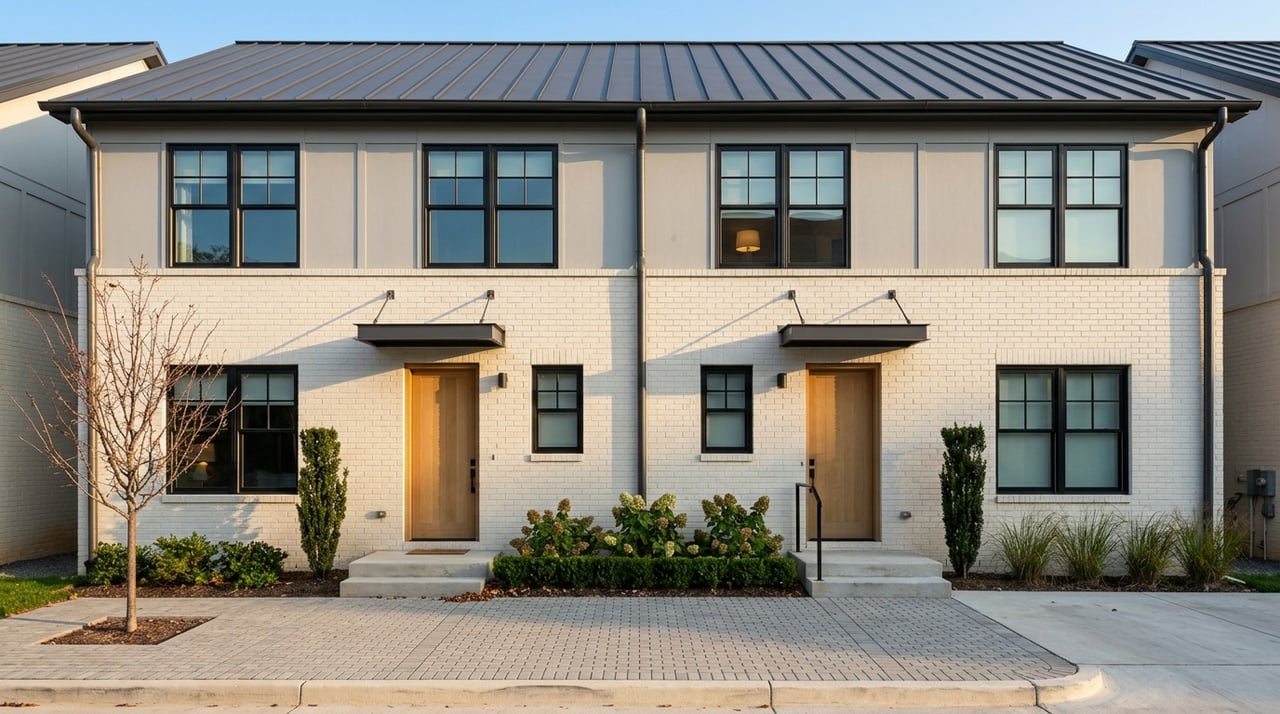
Buying in Chattanooga often starts with one deceptively simple question: should you choose a townhome or a house? If you are balancing budget, maintenance, privacy, and location, the answer is rarely just about square footage or list price. The right fit comes down to how you want to live, what you want to spend each month, and how much flexibility you want long term. Let’s dive in.
Start With Chattanooga Market Context
If you are comparing property types in Chattanooga, it helps to know you are shopping in a relatively balanced market. HUD reported about 4.1 months of single-family supply, 6.0 months of townhome supply, and 6.1 months of condominium supply in the Chattanooga housing market area as of March 2025.
That matters because your choices may feel a little different depending on the category. In the same report, HUD noted an average home sales price of $377,500 over the prior 12 months, with regular resale homes averaging $367,600 and new homes averaging $488,500. HUD also observed more infill, higher-density housing growth in the city of Chattanooga, which helps explain why townhome options are often easier to find in certain areas.
Where Townhomes And Houses Tend To Show Up
In Chattanooga, property type often connects to location pattern. City planning work indicates that higher-density residential development is generally more appropriate along corridors and near centers, while other areas remain more strongly shaped by single-family neighborhoods.
That means your search experience can vary by area. Red Bank's comprehensive plan describes the city as largely stable single-family neighborhoods, while planning documents for East Brainerd describe an area that grew into a bedroom suburb with residential subdivisions. If you want more attached or lower-maintenance options, parts of Chattanooga and mixed-inventory areas like East Brainerd may give you more to compare.
Compare Monthly Cost First
Before you decide based on style alone, compare the full monthly cost. A home payment can include principal, interest, property taxes, homeowners insurance, mortgage insurance, HOA fees, utilities, and maintenance.
This is where many buyers get clarity fast. A townhome may come with less exterior upkeep, but it may also come with HOA dues. Those dues are often paid separately from the mortgage, so they need to fit comfortably in your monthly budget.
Why Taxes Matter In Chattanooga
In Hamilton County, tax location can noticeably change your monthly payment. The City of Chattanooga lists its current city property tax at 1.93 per $100 of assessed value, and Hamilton County's 2025 certified rate is 1.5157 per $100.
Based on the county trustee's 2025 table, the combined city-plus-county rate is 3.4457 in Chattanooga, 2.4957 in Red Bank, and 2.3150 in East Ridge. For a $400,000 home assessed at the residential 25% rate, that works out to roughly:
- Chattanooga: $3,446 per year
- Red Bank: $2,496 per year
- East Ridge: $2,315 per year
Those differences do not automatically make one area better than another, but they do affect your total monthly cost. When you are deciding between a townhome and a house, taxes should be part of the comparison from day one.
What A Townhome Often Offers
A townhome can be a smart fit if you want convenience, shared amenities, and less exterior maintenance. In many communities, the HOA collects fees, maintains common areas, and sets community rules.
That structure often appeals to buyers who want a more predictable upkeep routine. If you travel often, are relocating on a tight timeline, or simply do not want to spend weekends on yard work, a townhome may line up well with your lifestyle.
East Ridge offers a clear example. The Townhomes at the Gateway describes units of about 2,000 square feet with three bedrooms, two-and-a-half baths, attached garages, a clubhouse, workout area, gathering space, and outdoor pool. It also promotes a maintenance-free lifestyle, which is exactly the tradeoff many townhome buyers are looking for.
East Brainerd is another useful comparison area because it includes a mix of housing options. Local neighborhood information notes that homes of many sizes are available there, including townhome options in communities such as Addison's Place, Brookside Commons, Holland Gardens, and Heron Square.
What A Detached House Often Offers
A detached house often makes more sense if you want privacy, more control, and room to adapt the property over time. Buyers who want a yard, extra storage, a workshop area, or more freedom to change the exterior often lean toward houses.
That choice can also fit long-term planning. If you think you may want more outdoor space, future landscaping projects, or more separation from neighboring walls, a detached home may support those goals better.
In the Chattanooga area, Red Bank is a strong example of a market shaped by single-family residential use. Its comprehensive plan states that single-family residential makes up more than 56 percent of the city and is spread throughout the community. Signal Mountain is another detached-home example, with local neighborhood information describing a mix of brick homes, bungalows, and historic homes on tree-lined streets.
The HOA Questions You Should Ask
If you are considering a townhome, do not stop at the monthly dues number. You should ask what the HOA actually maintains, whether there is a reserve fund, and whether special assessments have been charged recently.
You should also review the governing documents carefully. That includes the CC&Rs or bylaws, HOA financial statements, reserve information, and any rules about exterior changes or rentals. A lower-maintenance setup can be very attractive, but only if you understand the costs and limits that come with it.
It is also worth noting that some detached homes have HOAs too. If you are buying a house in a subdivision, confirm whether there are neighborhood covenants or community rules before you move forward.
How To Decide Based On Lifestyle
If you feel torn, step back from the listing photos and ask how you want daily life to feel. The better choice is usually the one that supports your routine, not just the one that looks best online.
A townhome may fit better if you want:
- Less exterior upkeep
- Shared amenities
- A more lock-and-leave lifestyle
- A location near corridors or activity centers
- More predictable community standards
A house may fit better if you want:
- More privacy
- A yard or outdoor project space
- Greater freedom for exterior changes
- Space for future modifications
- A more traditional single-family setting
A Simple Chattanooga Decision Framework
If you are deciding between a townhome and a house in Chattanooga, start with these four questions:
1. Do You Want Less Maintenance Or More Control?
This is often the biggest separator. Townhomes usually reduce exterior maintenance, while houses usually give you more autonomy.
2. Can You Comfortably Carry HOA Dues?
An HOA fee may be worth it if it replaces tasks you do not want to handle yourself. Still, it needs to fit your budget alongside your mortgage, taxes, insurance, and utilities.
3. Do You Need Outdoor Space?
If a yard, garden, play area, or workshop matters to you, a house may be the stronger fit. If that space is not a priority, a townhome may give you what you need with less upkeep.
4. Does The Area Match Your Long-Term Plan?
Think beyond the next year. Your commute, tax rate, neighborhood setting, and preferred housing style should all support the way you want to live in Chattanooga over time.
Why This Choice Matters For Relocating Buyers
If you are moving to Chattanooga from another city or state, this decision can feel harder because you are learning both the market and the area at once. A townhome can simplify maintenance and help you settle in quickly, while a detached house may better match a longer-term lifestyle plan if space and flexibility are high priorities.
This is where a clear, step-by-step approach matters. When you compare monthly cost, tax location, HOA structure, and neighborhood pattern together, the decision becomes much easier and much more practical.
Whether you are buying your first home, planning a move-up purchase, or relocating into Hamilton County, the goal is not just to pick a property type. It is to choose the home that fits your life with confidence.
If you want help comparing Chattanooga townhomes and houses in a clear, low-stress way, The Gideon Group® - Michelle Johann can help you build a smart, step-by-step plan tailored to your move.
FAQs
What is the main difference between a townhome and a house in Chattanooga?
- A townhome often offers less exterior maintenance and may include HOA-managed amenities, while a detached house usually offers more privacy, yard space, and flexibility.
Are townhomes in Chattanooga always cheaper than houses?
- Not always. You need to compare the full monthly cost, including mortgage, taxes, insurance, HOA dues, utilities, and maintenance.
Do Chattanooga townhomes usually have HOA fees?
- Many do. Buyers should confirm the monthly dues, what the HOA maintains, whether there is a reserve fund, and whether any special assessments have been charged.
Do detached houses in Hamilton County ever have HOA rules?
- Yes. Some single-family homes are located in subdivisions with covenants or HOA rules, so it is important to verify that before buying.
Which Chattanooga areas tend to have more townhome options?
- Higher-density housing is generally more common along corridors and near centers, and mixed-inventory areas such as East Brainerd can offer both townhomes and detached homes.
How do property taxes affect a Chattanooga home purchase decision?
- Tax rates can vary by location, which changes your total monthly housing cost. In 2025, the combined rate was higher in Chattanooga than in Red Bank and East Ridge, so buyers should compare taxes early in the process.